You are brushing your teeth, lean a little closer to the mirror and notice something you had not seen before: a small white patch near the gumline, or a brownish line in the groove of a back tooth. It does not hurt, but now you are wondering whether this is the start of a cavity.
Tooth decay is much easier to manage when it is caught early, and many early cavities give no warning through pain at all. Knowing what to look for helps you decide when a mark is probably harmless and when it is worth showing to a dentist.
The short answer: An early cavity usually looks like a dull, chalky white spot or a light brown mark on the enamel, often along the gumline or in the grooves of the back teeth. There is typically no hole and no pain yet. Because stains and harmless marks can look similar, only a dentist can confirm whether it is decay.
What an early cavity actually is
A cavity does not appear overnight. It develops slowly as bacteria in dental plaque feed on sugars and starches and produce acids. Each time you eat or drink something sugary, these acids pull minerals out of the enamel, the hard outer layer of the tooth. Between meals, saliva and fluoride help put some of those minerals back.
When mineral loss happens faster than repair, the enamel weakens beneath the surface. Dentists call this first stage demineralization, or a white spot lesion. The surface still looks intact, but the enamel underneath has become porous. If the process continues, the weakened area can collapse into an actual hole, and the decay can then spread into the softer dentin underneath.
The important point is this: at the white spot stage, the damage can often still be stopped, and sometimes partly reversed. Once a real cavity has formed, the tooth cannot repair it by itself.
Visible signs of an early cavity
Look at your teeth in good, natural light with a clean, dry tooth surface. Gently drying a tooth with a tissue often makes early changes easier to see. Common signs include:
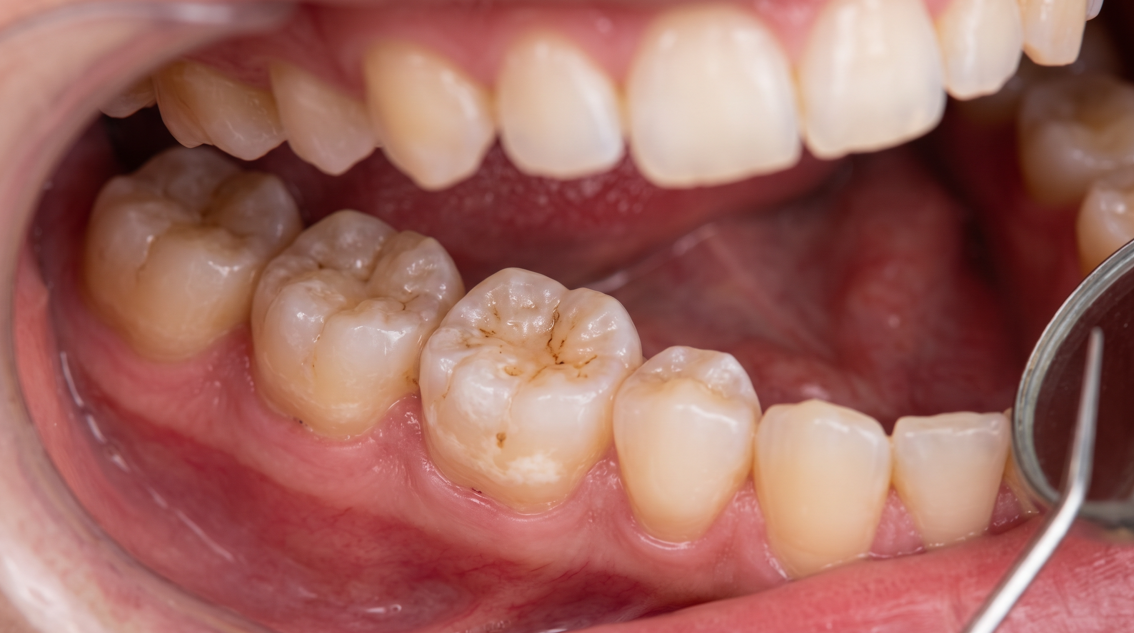
- Chalky white spots. Matte, opaque patches that look duller than the glossy enamel around them, often near the gumline or around braces brackets.
- Light brown or yellowish spots. An early lesion can pick up stains over time and turn brown. Spots that look rough or seem to be growing deserve attention.
- Dark lines in the grooves. The chewing surfaces of molars have deep pits and grooves where plaque collects. A brown or black line that is getting wider can be a sign of decay.
- A grey shadow between teeth. Decay between teeth is hard to see directly. Sometimes it shows as a greyish shadow under the enamel at the edge of a tooth.
- A small rough or soft-looking area. A spot that looks rough, pitted or slightly sunken can mean the surface is starting to break down.
What an early cavity can feel like
In the earliest stage, most people feel nothing at all. That is exactly why early cavities are usually found during routine checkups rather than because of discomfort. As decay moves deeper, you may notice:
- Brief twinges of sensitivity when you eat something sweet, cold or hot
- Floss that catches or shreds in the same spot between two teeth
- Food getting trapped repeatedly in one area
- A rough edge your tongue keeps finding
These signs do not prove there is a cavity, but if they keep happening in the same place, they are a good reason to book a dental visit.
What can look like a cavity but is not
Not every spot on a tooth is decay. Several common conditions can look similar:
- Surface stains from coffee, tea, red wine or tobacco. These are usually smooth and spread across several teeth.
- Fluorosis, which can cause white streaks or flecks from higher fluoride exposure while the teeth were forming.
- Developmental enamel marks that have been there since the tooth came in and do not change over time.
- Tartar, a hard yellow or brown deposit along the gumline that can be removed at the dental practice.
- Old fillings and their edges, which can look dark or discoloured but may still be perfectly sound.
Telling these apart from decay in a mirror can be tricky, and cavities between teeth often show up only on an X-ray. A photo-based free AI dental check can help you decide whether a spot deserves a closer look, but the final answer should always come from a dentist.
What to do if you spot one
Found what looks like an early cavity? No need to panic, but it is worth acting:
- Brush twice a day with fluoride toothpaste. After brushing, spit out the excess instead of rinsing with water, so the fluoride stays on your teeth longer.
- Clean between your teeth every day with floss or interdental brushes.
- Cut down how often you have sugar. Frequent snacking and sipping sugary or acidic drinks keep your teeth under constant acid attack. How often matters as much as how much.
- Book a dental checkup. A dentist can examine the spot, take an X-ray if needed and suggest options such as fluoride varnish, fissure sealants, monitoring over time, or a small filling if a cavity has already formed.
See a dentist urgently if you have strong or throbbing tooth pain, pain that wakes you at night, swelling of the gum or face, a bad taste or pus in your mouth, a fever, or a broken tooth. These signs point to something beyond an early cavity and should not wait.
Check your teeth free in 30 seconds
Not sure whether that spot is something to worry about? Take a clear photo of your teeth and upload it to DentalAI's free online teeth scanner. In about 30 seconds you get an AI screening that highlights areas worth attention, and you can then talk to a real dentist online for free to discuss what you see and what to do next.
This article is for general information only and is not a diagnosis. It does not replace an examination by a licensed dentist. If you have pain, swelling or fever, contact a dentist or emergency services.