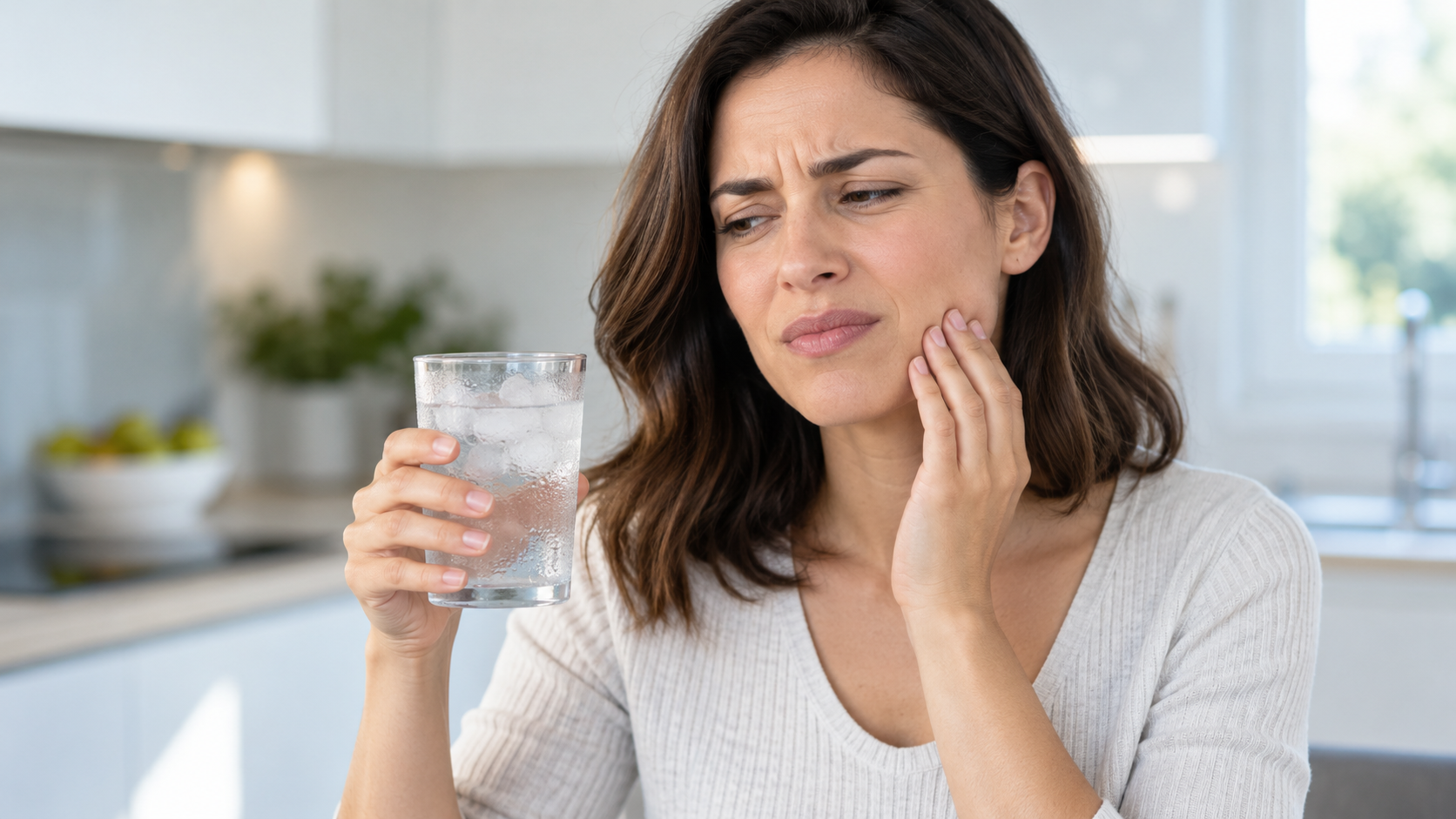
A sip of cold water should be refreshing. Instead, you feel a sudden sting in one tooth or a sharp sensation across several teeth, and start choosing warmer drinks.
That reaction is a symptom, not a diagnosis. How long it lasts, whether one tooth is affected and whether you also have pain when chewing all help a dentist work out what is happening.
The short answer: Cold water can trigger pain when dentine loses its protective covering, but cavities, cracks and filling problems can feel similar. Brief sensitivity and pain that continues after the drink need different assessment; recurring, lingering or worsening symptoms should be checked by a dentist.
Why cold water can trigger tooth pain
Enamel covers the visible part of a tooth. Beneath it is dentine, which contains tiny channels connected with the sensitive tissues inside. The root has a different protective covering and is normally sheltered by the gum.
When enamel wears down or the gum recedes, exposed dentine can react to temperature changes. This can produce a short, sharp sensation even when a tooth looks normal in the mirror. The explanation of sensitive teeth describes how loss of these protective layers can allow cold to stimulate sensitive tissues.
Cold water is usually revealing an existing problem; a single drink does not suddenly create a cavity. However, the sensation cannot tell you whether the problem is exposed dentine, decay or something deeper. A photograph also cannot show every cause.
Common causes of sensitivity to cold
Several conditions can produce overlapping symptoms:
- Gum recession: an exposed root surface may become sensitive. Recession can occur alongside gum disease or mechanical damage.
- Enamel wear: frequent acidic drinks, acid reflux and forceful brushing can contribute to loss of protection. The pattern varies between people.
- Tooth decay: a cavity may expose or irritate deeper tooth structures. An early cavity may not be visible to you.
- A crack or damaged filling: temperature changes can provoke pain, sometimes accompanied by discomfort when biting or releasing a bite.
- Recent dental treatment: a restored tooth can temporarily become sensitive, but worsening symptoms need review.
- Whitening: sensitivity may develop during or after treatment. Stop the whitening session if it causes pain and ask your dentist how to proceed.
The guidance on tooth whitening lists sensitivity as a possible side effect. Do not assume that all pain following whitening is harmless, particularly if it affects one tooth or persists.
What the pattern of pain can tell you
A brief sting that disappears when the cold is removed can fit dentine sensitivity. It does not prove that the tooth is healthy, especially when the symptom is new or repeatedly affects the same tooth.
Pain that continues after the drink, happens without a trigger or wakes you at night can indicate irritation or inflammation inside the tooth. The guide to tooth pain distinguishes momentary temperature sensitivity from lingering pain. Timing is useful information for your dentist, not a reliable home diagnostic test.
Note these details without repeatedly testing the tooth:
- Is the pain in one tooth, one side or several areas?
- Does it stop quickly or continue after the water is gone?
- Do hot drinks, sweetness or chewing also trigger it?
- Was there recent treatment, injury or whitening?
- Are there swelling, fever or an unpleasant taste?
A lack of swelling does not rule out a dental problem. Likewise, pain becoming quieter does not necessarily mean the underlying cause has healed.
How to reduce discomfort safely
Choose lukewarm drinks temporarily and avoid chewing foods that provoke pain. Keep drinking enough water; avoiding hydration is not a solution. Do not repeatedly sip icy water to see whether the tooth still hurts.
Brush twice daily with fluoride toothpaste and a soft toothbrush, using gentle pressure. Clean between your teeth carefully. Stopping cleaning altogether can allow plaque to accumulate and make gum problems worse.
A toothpaste intended for sensitive teeth may help exposed dentine when used regularly according to its instructions. It usually requires repeated use and will not seal a crack or repair a cavity. Ask a dentist for advice if the sensitivity is new, localised or persistent.
Limit frequent acidic drinks and avoid brushing immediately after acidic food or drink. Do not rub the tooth with lemon, abrasive powders or other homemade whitening mixtures. Never place aspirin directly on a tooth or gum; it can damage the tissue.
If symptoms began after a filling, contact the treating practice when pain is increasing or your bite feels uneven. Temporary sensitivity can occur, but you should not have to guess whether the restoration needs adjustment.
When to see a dentist and what they check
Arrange an appointment for new or repeated cold sensitivity, particularly in one tooth. Seek prompt assessment when pain lingers, occurs spontaneously, hurts when biting or continues despite gentle care. Severe pain that disrupts sleep or daily activities warrants urgent dental advice.
Swelling of the gum or face, fever with dental pain, or pus requires urgent assessment. Get emergency care if swelling affects breathing, swallowing or speaking, spreads towards the eye or neck, or is accompanied by marked difficulty opening your mouth. The toothache guidance explains when urgent help is needed.
The dentist may examine your gums, fillings and tooth surfaces, assess the bite, test responses and take an X-ray when indicated. Treatment might involve sensitivity management, gum care or repairing a cavity or restoration. Treatment of the tooth's pulp is considered only when the examination supports it; cold sensitivity alone does not automatically mean root canal treatment.
Start with a free dental screening
Upload a clear photo for DentalAI's free AI dental check, then talk to a real dentist online for free. This is an initial screening: a photo cannot reliably reveal hidden decay, small cracks or the condition of the nerve. A dentist must confirm findings, and urgent symptoms need direct care.
This article provides general information, not a diagnosis, and does not replace an examination by a licensed dentist. Contact a dentist for pain, swelling or fever; seek emergency care for breathing or swallowing difficulty or other emergency symptoms.