A tooth starts to beat or pulse, and every few moments your attention returns to it. The sensation may come in waves, continue after a drink, or become hard to ignore at bedtime.
That difference is worth describing to a dentist, but it does not identify the cause. To understand what the pain might indicate, consider the whole picture: its duration, triggers, recent treatment, and any swelling or fever.
The short answer: Throbbing tooth pain can accompany inflammation in the tooth pulp, infection, a crack, or problems in nearby tissues. Recurrent or persistent pain needs an examination, while severe pain, swelling, or fever warrants urgent care. Difficulty breathing or swallowing requires emergency medical help immediately.
1. What a throbbing sensation actually tells you
People use words such as pulsing, pounding, or beating to describe pain that rises and falls. Those words help explain the experience, but they are not a reliable test of what is happening inside the tooth.
A throbbing feeling does not prove that pus is present, that the nerve has died, or that the tooth must be removed. Equally, pain that is not throbbing can still need treatment. Its effect on sleep, eating, and daily life matters when deciding how quickly to seek care.
A simple description is enough. Note when it happens and what changes it, rather than repeatedly tapping or pressing the tooth to investigate.
2. Possible causes, including recent dental treatment
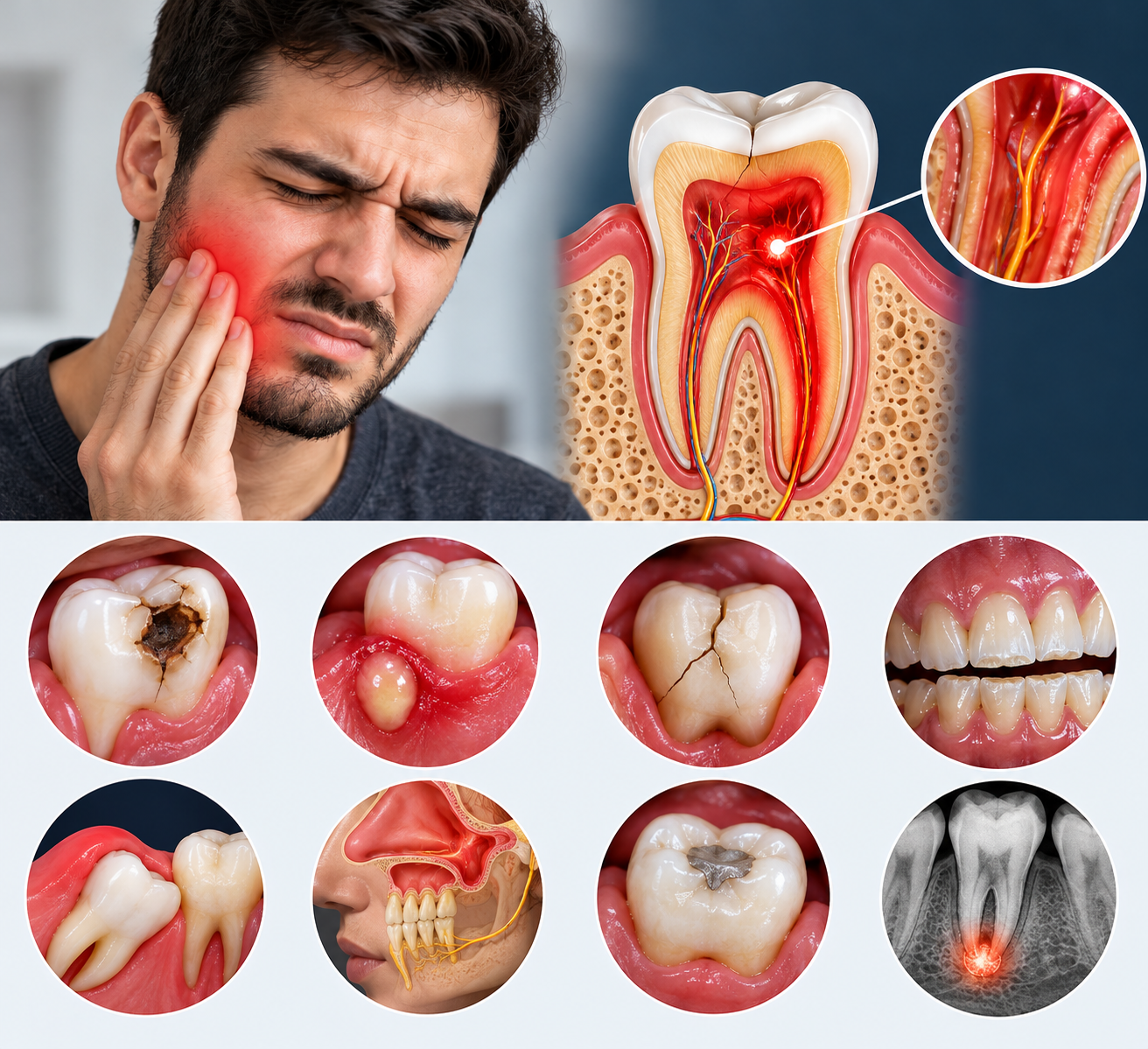
Inflammation inside a tooth: The pulp contains nerves and blood vessels. Deep decay, injury, or irritation can affect it, sometimes producing spontaneous pain or discomfort that outlasts a hot or cold drink. The clinical clues associated with tooth pain guide assessment, but do not replace examination.
Infection near the root or gum: An abscess is a collection of pus. It may cause pain, tenderness, swelling, or an unpleasant taste. Suspected infection needs professional assessment; you should not wait for a visible lump to appear.
A crack or damaged restoration: Chewing may irritate a cracked tooth or a tooth with a defective filling. What begins as an intermittent biting pain can become more persistent. A small defect may be difficult to see in a mirror or photograph.
Pain after a procedure: Some discomfort can follow treatment, but worsening or severe pain should be reported. After an extraction, increasing pain several days later can indicate dry socket or another complication. Dry socket involves disturbed healing of the socket and is not automatically the same as an abscess; extraction recovery advice explains why reassessment matters.
Gum problems, a partly erupted wisdom tooth, or clenching can also cause discomfort. If several upper teeth ache with nasal symptoms, tell the dentist, as pain can sometimes come from nearby structures rather than one tooth.
3. Which accompanying symptoms are useful clues?
No single clue provides a diagnosis at home. Together, the following details help the dentist choose what to examine:
- Temperature: Does pain stop quickly, or continue after the drink is gone?
- Biting: Does chewing or releasing a bite hurt, and is the same area repeatedly involved?
- Timing: Is the pain spontaneous, recurring, constant, or waking you from sleep?
- Local changes: Have you noticed swelling, a broken filling, gum tenderness, or a new bad taste?
- General symptoms: Is there fever, feeling unwell, or difficulty opening your mouth?
Absence of swelling does not rule out pulp inflammation or a hidden dental problem. A normal-looking tooth is not proof of health, and pain can sometimes be difficult to localize precisely.
Do not use repeated ice, hot drinks, or hard biting as self-tests. These may increase discomfort without providing a trustworthy answer.
4. When throbbing pain needs urgent attention
Get emergency medical help immediately for difficulty breathing, swallowing, or speaking, swelling spreading toward the eye or neck, or major difficulty opening the mouth with swelling. Do not wait for an online assessment in these circumstances.
Contact an urgent dental service for facial or gum swelling, fever with dental pain, suspected pus, or severe pain that prevents sleep or usual activities. New or worsening severe pain after dental treatment also needs prompt contact with the treating team.
Book an examination soon for persistent or recurring throbbing, lingering temperature pain, or pain when biting. Toothache lasting more than two days should be assessed; that is not a rule requiring you to wait two days before calling.
Guidance on dental abscess symptoms and urgent care explains the importance of swelling and systemic symptoms. If you cannot reach your regular dentist, contact a local urgent dental service.
5. What to do while waiting and how treatment is chosen
Choose soft foods, avoid chewing on the painful side, and reduce hot, cold, or sugary triggers. Clean gently with a soft toothbrush. Ask a pharmacist about suitable pain relief, mentioning your health conditions, pregnancy if relevant, allergies, and other medicines; follow the product instructions.
Do not put aspirin, alcohol, or concentrated oils against the gum. Do not puncture a swelling or start leftover antibiotics. If a procedure was recent, follow the treating team's aftercare instructions rather than improvising remedies.
At the appointment, the dentist checks teeth, gums, biting, and appropriate tooth responses. X-rays may help, although some problems are not obvious on a routine image. The history and examination must be considered together.
Treatment may involve a filling or restoration repair, care for the gums, treatment of an extraction socket, or a procedure addressing the tooth pulp. Root canal treatment or extraction is considered according to the findings, not the word throbbing.
Keep the appointment even if pain settles. Symptom relief alone cannot confirm healing, especially after repeated episodes or swelling. Tell the dentist about the improvement as part of the history, rather than assuming that no problem remains.
6. Start with a free initial dental screening
Want to show a visible concern? Upload a photo to DentalAI's free AI dental check, then talk to a real dentist online for free. Include how long the throbbing lasts and any swelling, fever, or recent treatment.
This is a screening, not a diagnosis. A photo cannot examine the tooth nerve, identify every crack, or rule out a hidden infection; a dentist must confirm findings. Urgent symptoms need in-person care without waiting for the online result.
General information only, not a diagnosis or a substitute for an examination by a licensed dentist. For pain, swelling, or fever, contact a dentist; for breathing or swallowing difficulty, contact emergency services immediately.